Lisbon Cathedral
Largo da Sé, 1100-585 Lisboa, Portugal



Specification
Ticket Office Family Friendly“Lisbon Cathedral: Lisbon’s Oldest Church is the Sacred SE Cathedral”
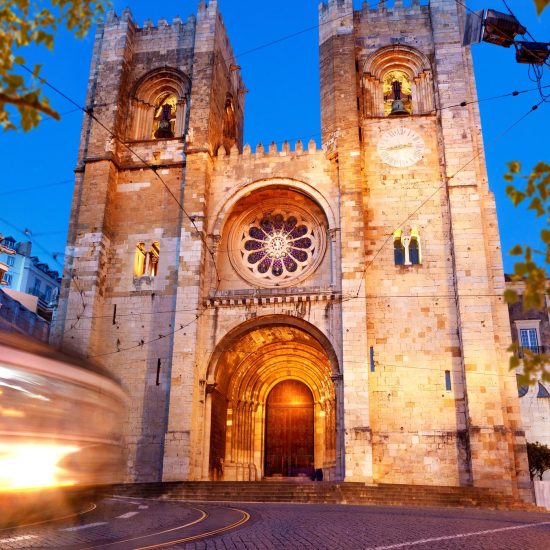
🏰 Standing proudly amidst the hum of Lisbon’s daily life is its ancient Lisbon Cathedral, a bastion of faith and history. The Sé de Lisboa, as it is known, is not only the physical ‘House of God’ and the ecclesiastical ‘House of the Church’ for the Patriarchate of Lisbon but also a venerable symbol of sanctuary and unity. Its walls echo the collective memory of the city and indeed of Portugal, having been a steadfast witness to the ebb and flow of time since the Christian reconquest in 1147.
⛪ The inception of the Lisbon Cathedral can be traced back to a poignant moment in history – the recapture of the city from Moorish rule. It was then that the victorious King Afonso Henriques ordained the transformation of the site of the Greater Mosque into a cathedral, a task that began in 1147. This sacred ground, thus layered with religious significance, was also the site of an ancient Visigoth church, melding a network of spiritual heritages into one location.
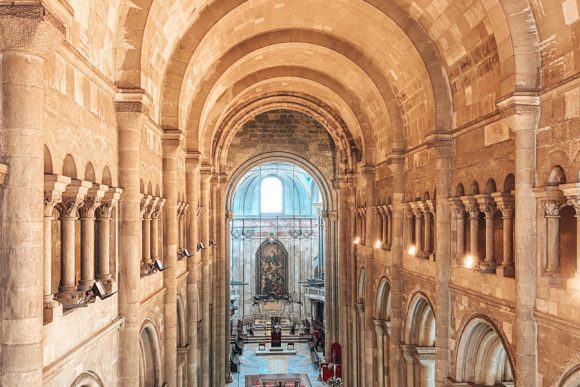
📜 As one walks through the cathedral’s Romanesque arches, it’s easy to feel the presence of history in the air. The architecture, having been crafted under the guidance of Mestre Roberto, shares a kindred spirit with the Old Cathedral of Coimbra. Yet, Lisbon’s cathedral is not a mere relic; it has evolved with time, bearing the marks of Gothic and Mannerist influences, and even the scars of Lisbon’s devastating earthquakes, most notably in 1755.
🛠️ The Cathedral’s design and structure are an anthology of the ages it has survived. The Gothic cloister, the solemn ambulatory, and the pantheon created for St. Vincent’s relics, each tell a story of an era’s faith and artistry. Over centuries, the cathedral has been molded by the hands of kings and architects, with each leaving a distinctive touch, from D. Afonso IV’s Gothic additions to the Mannerist sacristy of 1649.
Lisbon Cathedral Drone Footage
🔨 The catastrophe of 1755 brought ruin but also renewal. The 18th-century reconstruction, led by architect Reinaldo dos Santos, ushered in a new chapter for the cathedral, one that saw the rebirth of the Chapel of the Most Holy and the reinforcement of the nave’s roof. These efforts, like phoenix feathers, are testaments to the resilience not only of the structure but also of the spirit it embodies.
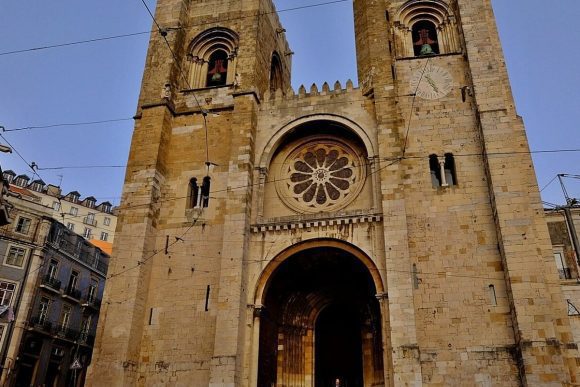
🎖️ The 20th century brought with it a wind of revivalist restoration. Architects like Augusto Fuschini and António do Couto Abreu were charged with the delicate task of peeling back layers of Baroque additions to reveal and restore the medieval bones of the cathedral. The result is the Neo-Romanesque guise we see today – a façade crowned with battlements and a rose window, a fitting visage for a monument that has been a sentinel of faith and history.
🌆 Now, as a National Monument and a cherished emblem of the city, Lisbon Cathedral continues to hold its doors open to all. It stands not only as a place of worship but as a living museum where every stone is steeped in tales of piety and conquest. It’s a crossroad where the paths of faith and history intersect, offering a silent yet eloquent narrative of Portugal’s spiritual journey. Here, within these venerable walls, the heart can find a moment of repose and the mind, a wealth of contemplation.
OPENING TIMES
| Saturday | 10 AM–6 PM |
| Sunday | Closed |
| Monday | 9:30 AM–6 PM |
| Tuesday | 9:30 AM–6 PM |
| Wednesday | 9:30 AM–6 PM |
| Thursday | 9:30 AM–6 PM |
| Friday | 9:30 AM–6 PM |