Museu Nacional do Azulejo
R. Me. Deus 4, 1900-312 Lisboa, Portugal



Specification
Cafe Day Trip Family Friendly“Lisbon Tile Museum: Artistic Heritage at Museu Nacional do Azulejo”
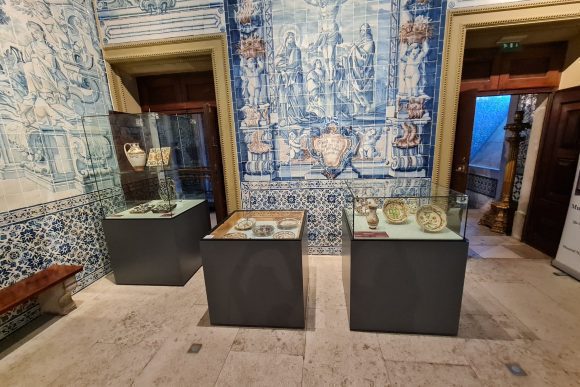
🏺 Sliding through the doors of the Museu Nacional do Azulejo is a great way to journey through Portuguese culture via the art of azulejos, the iconic ceramic tiles that have become a symbol of the nation’s artistic identity. Housed in the former Convent of Madre de Deus, founded in 1509 by Queen D. Leonor, this museum is home to these ornate tiles but also serves as repository of history, mirroring the country’s past through its exquisite collection. They are also just very beautiful.
🖼️ Among the museum’s treasures is a remarkable tile panel that offers a panoramic view of Lisbon prior to the devastating earthquake of 1755. This piece alone warrants a visit, as it not only displays the artistry and intricacy of tile work but also serves as a historical document, preserving a Lisbon that was lost to time and nature. The details encapsulated within the tiles tell a story, each piece a narrative of the city’s pre-earthquake grandeur.
🛠️ The history of the Museu Nacional do Azulejo (MNAz) is a fascinating tale in itself. From its early days as an annex to Casa Pia to becoming a subsidiary of the National Museum of Ancient Art, the site has undergone numerous transformations. The convent and its church have seen a variety of repairs and alterations, playing host to the D. Maria Pia Asylum. With tile panels transferred from other locations and stored, what was intended as mere decoration evolved into a collection worth of admiration and study.
🔍 The journey towards becoming a dedicated tile museum was spearheaded by Engineer João Miguel dos Santos Simões, a pivotal figure responsible for the assembly and organization of the tiles under the auspices of the Calouste Gulbenkian Foundation. His efforts laid the foundation for what would eventually become an independent institution, recognized for its cultural and historical significance.
🚪 In the late 1960s, discussions and preparations hinted at the potential public opening of the museum. The meticulous process, detailed by Santos Simões in his correspondence, underscores the dedication to preserving and showcasing this important aspect of Portuguese heritage. The realization of this vision saw some bureaucratic complexities and institutional challenges, as conveyed in the urgent communications regarding the museum’s inauguration.
Museu Nacional do Azulejo
🎨 By 1973, Rafael Salinas Calado had taken up the mantle, charged with overseeing the Ceramics Section of the National Museum of Ancient Art at the Madre de Deus site. His appointment was crucial in advancing the mission initiated by Santos Simões and in enriching the museum’s collection and display.
📜 The significant decree of September 26, 1980, marked a new era for the Azulejo Museum, granting it national status and autonomy from the National Museum of Ancient Art. This legislative act not only recognized the museum’s importance but also affirmed its role in celebrating and conserving Portuguese artistic endeavors.
The museum is a guardian of tradition, a curator of beauty, and a bridge to the past, making it an essential visit for anyone seeking to broaden their knowledge of Portuguese & Lisbon culture.
OPENING TIMES
| Monday | 10 am–6 pm |
| Tuesday | 10 am–6 pm |
| Wednesday | 10 am–6 pm |
| Thursday | 10 am–6 pm |
| Friday | 10 am–6 pm |
| Saturday | 10 am–6 pm |
| Sunday | 10 am–6 pm |