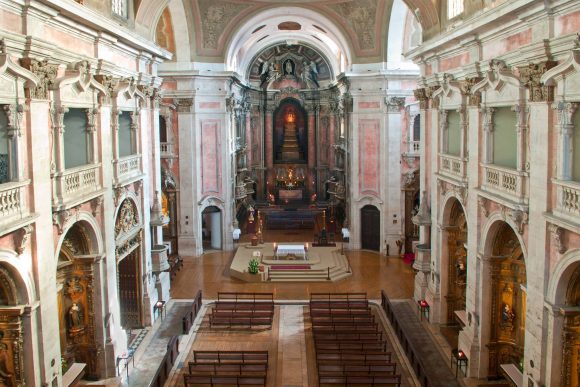
🛡 On the charming Lisbon viewpoint of Miradouro da Graça, the Convento da Graça offers incredible panoramic vistas as well as look into Portugal’s heartening history and religious artistry. Adjacent to a viewpoint that overlooks the sprawling city and the Tagus River, the site’s foundation dates back to the nascent stages of the Portuguese nationality in the 13th century. It’s a poignant emblem of faith where King Afonso Henriques, during the siege of Lisbon in 1147, is said to have camped with his troops. The convent and church, belonging to the Order of Hermits of St. Augustine—historically referred to as the Order of the Gracians—impress upon visitors a sense of reverence that befits its storied past.
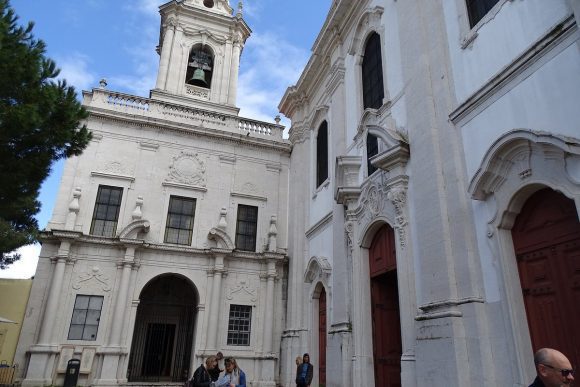
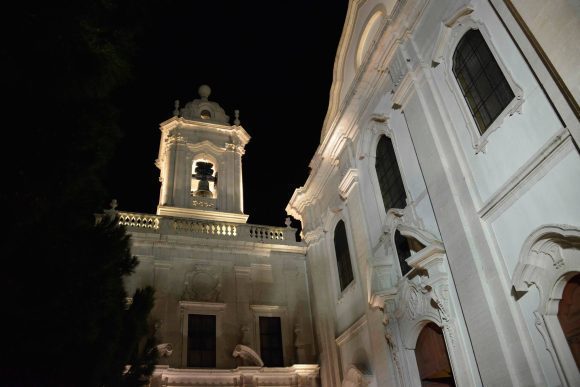
🏗 Following the devastation of the 1755 earthquake, the Convento da Graça underwent significant restoration, blending the late Baroque elements with traces of its original Manueline core, particularly in the baptistery and the Almadas chapel. This stylistic amalgamation continues with the Mannerist cloister, telling of a resilient structure that has weathered the ravages of nature and time. The frontage of the complex is particularly striking, featuring a dual façade set at an angle, combining the church and the old conventual gateway topped by a bell tower designed by Manuel da Costa Negreiros in 1738. This architectural ensemble speaks to a rich heritage that has been carefully preserved and adapted over centuries.
Miradouro da Graça Lisbon Viewpoint – (without the climbing)
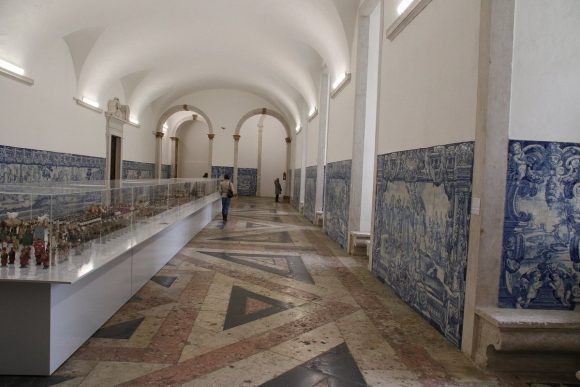
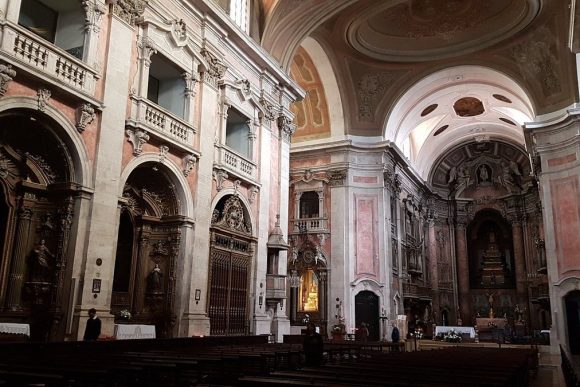
🎨 Inside, the austerity of the structure belies the richness of its contents. The interior is an articulate dialogue between the sobriety of structure and the opulence of decoration, especially evident in its gilded wood carvings and azulejo tiles spanning the 16th to the 18th centuries. The Baroque sacristy is adorned with allegorical paintings by Pedro Alexandrino de Carvalho, featuring a grand panel of Relics and the tomb of D. Mendo de Fóios Pereira. These artistic treasures reflect the skill and devotion of generations of Portuguese craftsmen and artists.
📜 Historically, the convent’s significance is further accentuated by its association with Portuguese royalty and nobility. It was the head of the Augustinian Order’s Portuguese province from 1291 until the suppression of religious orders in 1834. One is moved by stories, such as the legendary appearance of the image of Our Lady of Grace in Cascais in 1362, which was said to have been delivered to the convent the following day by fishermen. The legendary tales continue with the image foretelling the victory of D. João I at the Battle of Aljubarrota, cementing the convent’s role in the spiritual life of Lisbon.
🛡 The Convento da Graça is also interwoven with Portugal’s martial past, having served as a military barracks following the dissolution of the monastic orders. Yet, it’s the peaceful and reflective ambiance that now prevails, inviting visitors to ponder the layers of history embedded within its walls. Designated a National Monument in 1910, the Convento da Graça stands as a custodian of Lisbon’s ecclesiastical heritage, offering a sanctuary of tranquility and a repository of tales from epochs long past.
⚜️ As the city of Lisbon evolved, the convent benefited from royal attention and patronage, expanding its footprint and influence. The inclusion of the convent within the Fernandina wall in 1375 and subsequent donations of land by D. João III are but chapters in its storied existence. Furthermore, the testament of Afonso de Albuquerque in 1506 and the establishment of noble family chapels within its precincts weave a narrative of piety, ambition, and grandeur that echo through its halls.
🙏 Today, the Convento da Graça remains a steadfast pillar of faith and tradition, with the annual procession of the Lord of the Steps of Grace—a devotional practice that dates back to 1586 and continues to this day under the auspices of the Real Brotherhood. This continuity of worship connects the contemporary visitor to the Lisbon of yore, allowing one to walk in the footsteps of the devout, the noble, and the commoner alike, all of whom have found solace and grace within these hallowed grounds.
It’s a bit of a hike up the hill so you may want to get a tuk-tuk or taxi but it is well worth the view and if you can grab a refreshing drink at the top in the local quiosque!
Used to distinguish new sessions and visits. This cookie is set when the GA.js javascript library is loaded and there is no existing __utmb cookie. The cookie is updated every time data is sent to the Google Analytics server.
30 minutes after last activity
__utmc
Used only with old Urchin versions of Google Analytics and not with GA.js. Was used to distinguish between new sessions and visits at the end of a session.
End of session (browser)
__utmz
Contains information about the traffic source or campaign that directed user to the website. The cookie is set when the GA.js javascript is loaded and updated when data is sent to the Google Anaytics server
6 months after last activity
__utmv
Contains custom information set by the web developer via the _setCustomVar method in Google Analytics. This cookie is updated every time new data is sent to the Google Analytics server.
2 years after last activity
__utmx
Used to determine whether a user is included in an A / B or Multivariate test.
18 months
_ga
ID used to identify users
2 years
_gali
Used by Google Analytics to determine which links on a page are being clicked
30 seconds
_ga_
ID used to identify users
2 years
_gid
ID used to identify users for 24 hours after last activity
24 hours
_gat
Used to monitor number of Google Analytics server requests when using Google Tag Manager
1 minute
__utma
ID used to identify users and sessions
2 years after last activity
__utmt
Used to monitor number of Google Analytics server requests
10 minutes
_gac_
Contains information related to marketing campaigns of the user. These are shared with Google AdWords / Google Ads when the Google Ads and Google Analytics accounts are linked together.
90 days
Marketing cookies are used to follow visitors to websites. The intention is to show ads that are relevant and engaging to the individual user.
Facebook Pixel is a web analytics service that tracks and reports website traffic.