National Pantheon Lisbon
Campo de Santa Clara, 1100-471 Lisboa, Portugal

Specification
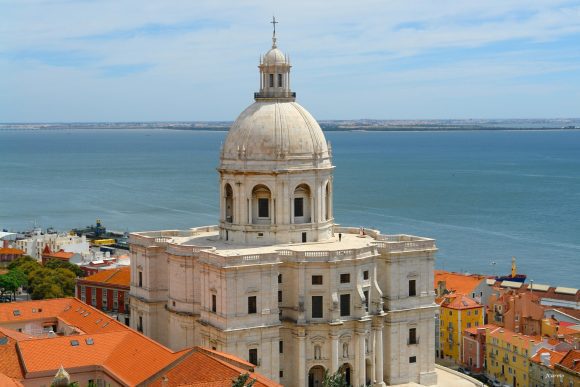
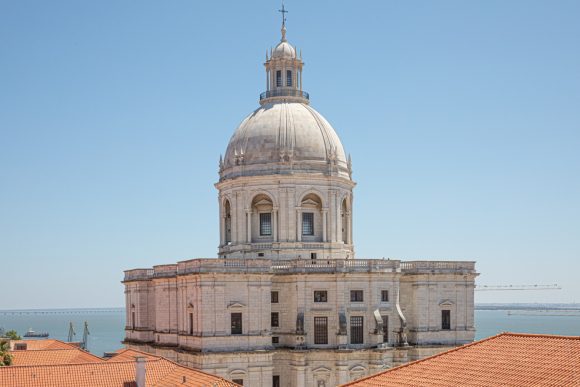
Disabled Access Family Friendly⛪ The National Pantheon Lisbon, housed within the stoic Church of Santa Engrácia, possesses a unique distinction of being Portugal’s solitary exemplar of Baroque architecture. Perched by the tranquil waters of the Tagus River in the Alfama district, it boldly punctuates the historical fabric of Lisbon’s skyline. The grandeur of the Lisbon Pantheon is matched by the panoramic splendor offered from its terrace, where the confluence of the city’s urban landscape and the river’s natural beauty can be absorbed in one sweeping gaze. Nearby you have a wealth of other places to see and visit including the Water Museum & Tile Museum towards Expo or the other way onto town you have the iconic Castle of São Jorge and a wealth of international restaurants and other great things to entertain yourself or company with.
⏳ A monument encased in legend and a prolonged labor of centuries, the National Pantheon Lisbon and its troubled history are embroidered with tales of curses and commitments. The construction saga, initiating in the late 16th century, has left little from the original church except for a story of desecration, a wrongful death, and a curse that seemingly bound the church to an eternal state of incompletion. Despite the fervent efforts of the Brotherhood of Slaves of the Blessed Sacrament, the church’s transition to a majestic temple lingered, the bold Baroque design of João Antunes left unsheltered to the whispers of time until the 20th century.v
🏗️ It was the Estado Novo regime that finally broke the proverbial spell, bringing to fruition the works of Santa Engrácia. With political motives entwined, the regime sought to showcase its resolve by completing the monument that generations had seen as an enduring project. The result was a magnificent double concrete dome, a testament to both the power of human will and the regime’s desire to cement its legacy.
National Pantheon Lisbon From Above!
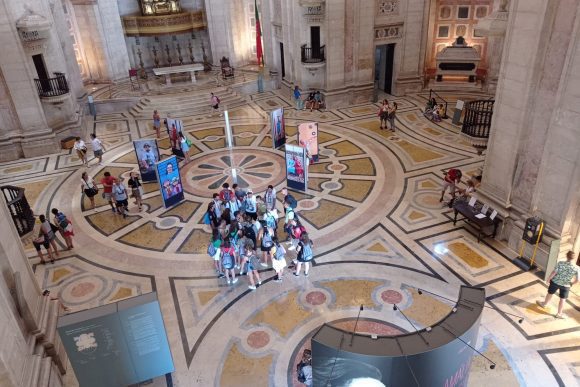
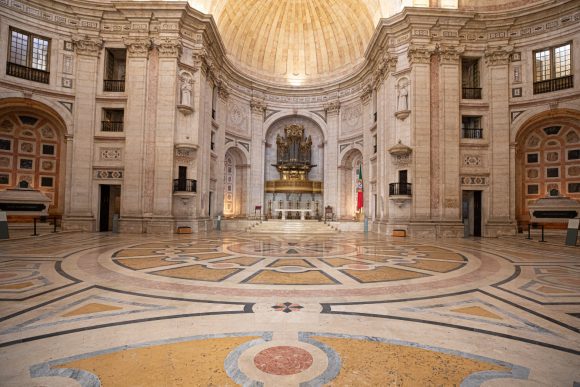
💫 Inside the National Pantheon, visitors are welcomed by a rich tapestry of varied stonework, a silent yet eloquent homage to the craftsmanship of its builders. The interior restoration, completed in the mid-20th century, breathed new life into the edifice, finally allowing it to serve as the resting place for Portuguese luminaries as was intended with its conversion to a pantheon.
🎉 The inauguration of Santa Engrácia as the National Pantheon Lisbon on December 7, 1966, coincided symbolically with the fortieth anniversary of the Estado Novo, and the year the Tagus Bridge began to unify Lisbon with Almada. This confluence of events marked a pivotal moment in Portuguese history, intertwining the destinies of the nation’s heritage, modernization, and political narrative.
💰 With an entry fee of €8.00, the National Pantheon Lisbon is accessible to the public, welcoming both locals and tourists to partake in its storied past. The convenience of payment methods, accepting cash, Visa, and ATM, indicates the seamless blending of historical reverence with modern-day visitor facilitation.
OPENING TIMES
| Monday | Closed |
| Tuesday | 10 am–5 pm |
| Wednesday | 10 am–5 pm |
| Thursday | 10 am–5 pm |
| Friday | 10 am–5 pm |
| Saturday | 10 am–5 pm |
| Sunday | 10 am–5 pm |